When an aging parent or loved one can no longer live safely on their own, families encounter a confusing list of care options.
Adult family home. Adult foster home. Assisted living. Memory care. Residential care. Skilled nursing. Nursing home.
What do these terms mean — and which type of care is right?
The answer depends on the person’s care needs, medical needs, independence, preferred environment, and location.
It can be especially confusing in Washington and Oregon because the states don’t always use the same terminology.
What Are the Main Types of Senior Care?
Common options include:
- Independent living
- Adult family homes in Washington
- Adult foster homes in Oregon
- Assisted living
- Residential care facilities in Oregon
- Memory care
- Nursing homes or skilled nursing facilities
- Continuing care retirement communities
Adult Family Homes in Washington
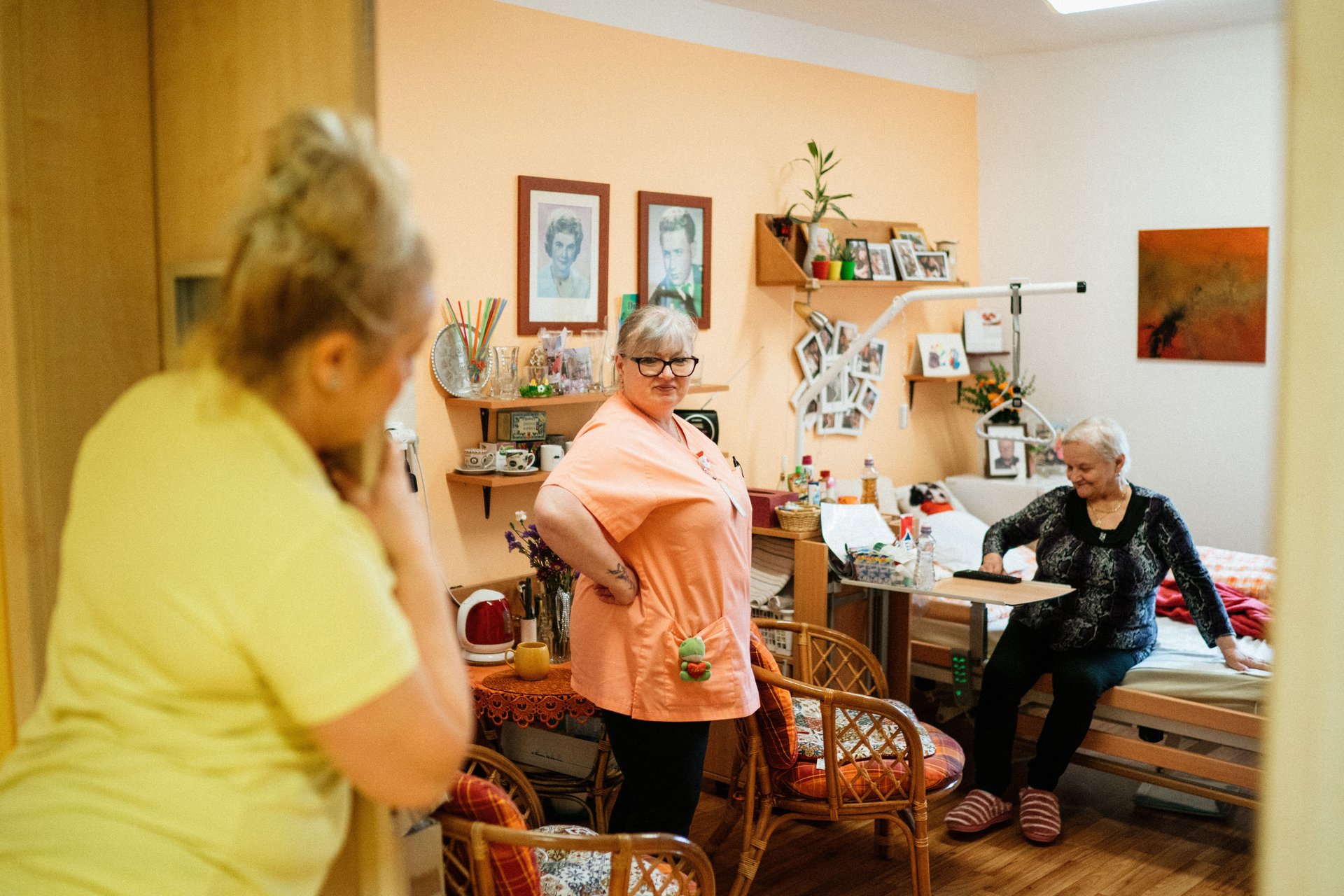
An adult family home is a licensed residential home providing housing and care to a small number of adults.
Residents live in a neighborhood home where caregivers provide support.
Services can include meals, supervision, personal care, mobility assistance, medication assistance, and other services depending on the provider and resident.
Adult family homes may appeal to people who prefer a smaller, residential environment or need regular assistance with daily activities.
Because homes are individually operated, their specialties, environments, staffing, and services can vary considerably.
Adult Foster Homes in Oregon
Oregon uses the term adult foster home for a small licensed residential care setting.
The easiest way for families searching across the border to remember it is:
Washington: Adult Family Home
Oregon: Adult Foster Home
The states have different licensing systems, but both terms describe smaller residential care environments.
Assisted Living
Assisted living combines housing with personal-care assistance while supporting as much independence as possible.
Communities are typically larger than adult family or adult foster homes.
Residents may receive help with bathing, dressing, grooming, medication, meals, housekeeping, laundry, mobility, and other daily needs.
Assisted living may appeal to someone who needs assistance but enjoys the amenities and social opportunities of a larger community.
Residential Care Facilities in Oregon
Oregon also licenses residential care facilities.
These provide housing, personal care, supervision, and health-related services and are distinct from adult foster homes.
When comparing care settings, look beyond the name and ask specifically about staffing, services, and level of care.
Memory Care
Memory care is specialized care for people living with Alzheimer’s disease, dementia, or other cognitive impairment.
It may be provided within adult family or foster homes, assisted living, residential care facilities, or dedicated memory-care settings.
A dementia diagnosis alone doesn’t automatically determine the right environment.
The important question is whether the specific provider can safely meet the person’s needs.
Nursing Homes and Skilled Nursing Facilities
Nursing homes provide a higher level of nursing and medical care than most residential care settings.
They may be appropriate for someone who has significant medical needs, requires 24-hour nursing care, needs rehabilitation, or has complex health conditions.
Some skilled nursing stays are temporary following illness, surgery, or hospitalization. Others involve long-term care.
Someone who needs help with daily activities does not automatically need a nursing home.
Independent Living
Independent living is intended for older adults who are generally able to care for themselves but want senior housing, convenience, amenities, or community.
It generally doesn’t assume responsibility for providing ongoing personal or medical care.
Continuing Care Retirement Communities
Continuing care retirement communities, sometimes called CCRCs or life-plan communities, provide multiple levels of care within one broader community.
A resident may enter independently and later transition to assisted living or nursing care as needs change.
These arrangements may involve substantial financial commitments and contracts that should be carefully reviewed.
What Is Nurse Delegation?
Nurse delegation isn’t another type of facility.
It allows a registered nurse to delegate certain nursing tasks to appropriately trained caregivers when applicable requirements are met.
This may allow some individuals with nursing-related needs to remain in residential settings such as an adult family home rather than automatically requiring a nursing home.
Nurse delegation has limits and is not the same as 24-hour skilled nursing care.
Adult Family Home vs. Assisted Living: What’s the Biggest Difference?
Adult family homes are generally smaller and residential.
Assisted living communities are generally larger and more community or apartment-style.
Both can provide assistance with daily activities.
Neither is automatically better.
The right choice depends on the individual.
Adult Family Home vs. Nursing Home: What’s the Difference?
The biggest distinction is generally the level of nursing care required.
Adult family homes provide residential care and personal assistance and may provide or coordinate certain nursing services.
Nursing homes provide a higher level of 24-hour supervised nursing care.
How Do You Know Which Type of Care Is Right?

Start with the person.
Consider:
- Can they safely be alone?
- Do they need help bathing or dressing?
- Can they manage medications?
- Are falls a concern?
- Are there memory concerns?
- Do they require regular nursing care?
- Would they prefer a small home or larger community?
- What can they afford?
- Will Medicaid be involved?
- Are their needs likely to increase?
Then compare individual providers.
Don’t Choose Based on the Category Alone
Two adult family homes can be very different.
So can two assisted living communities.
One provider may specialize in dementia. Another may have particular experience with mobility needs.
Choosing care shouldn’t stop at:
“We need assisted living.”
The next question should be:
“Which provider is the right fit for this person?”
Frequently Asked Questions
Is an adult family home the same as assisted living?
No. Both can provide assistance, but adult family homes are generally smaller residential homes, while assisted living communities are typically larger.
What is the Oregon equivalent of an adult family home?
Oregon uses the term adult foster home.
Does someone with dementia automatically need memory care?
Not always. The appropriate setting depends on the person’s needs and whether the provider can safely support them.
What’s the difference between assisted living and a nursing home?
Assisted living generally focuses on housing and assistance with daily activities. Nursing homes provide a higher level of 24-hour nursing and medical care.
The Bottom Line
There is no single care option that’s right for everyone.
The goal isn’t simply to find care.
It’s to find care that fits the person.
Ovella Living helps families explore residential care options, learn about providers, and make more informed decisions when searching for care.
This article is for general educational purposes and is not medical, legal, or financial advice.
Ready to start touring homes?
Search license-verified Adult Family Homes near you — free, always.